

Australia and New Zealand both have changeable weather. During a single tour, you may experience hot and humid conditions, cool mornings, strong sunshine, wind and rain.
The temperatures below are historical averages, not forecasts. Check the Australian Bureau of Meteorology or New Zealand MetService shortly before departure for the latest forecasts. Temperatures are shown as typical overnight lows to daytime highs.
Australia in April

April is autumn in Australia. Conditions should generally be warm and pleasant, but they vary considerably between tropical Cairns and the cooler southern destinations.
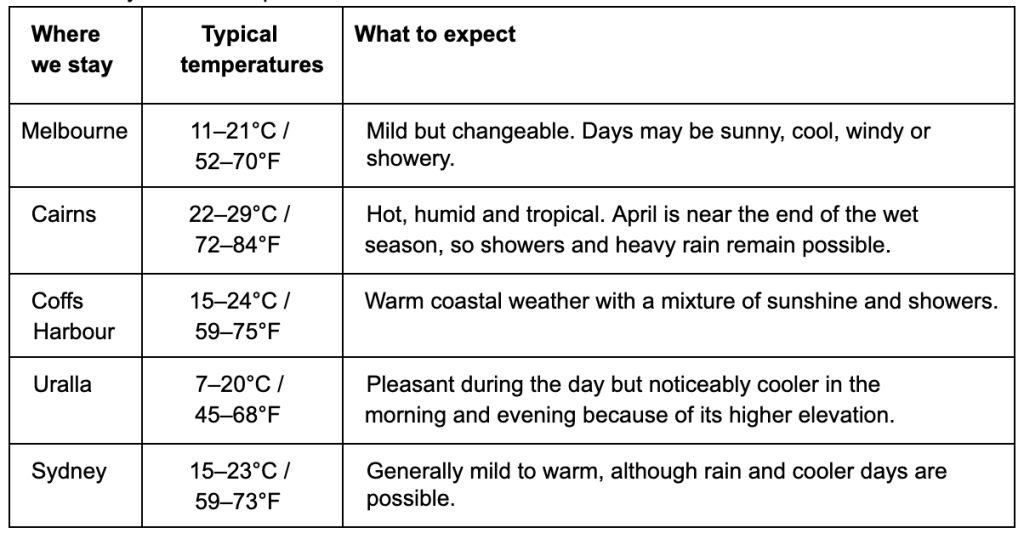
What to pack for Australia in April
Pack primarily for warm weather, but include layers for Melbourne and Uralla:
● Lightweight shirts and T-shirts
● Shorts, skirts or lightweight trousers
● One sweater or fleece
● A light jacket for cooler mornings and evenings
● A lightweight waterproof rain jacket
● Comfortable closed walking shoes
● Sandals or other warm-weather footwear
● Swimwear for Cairns
● Sun hat, sunglasses and sunscreen
● A small umbrella, if desired
You should not need a heavy winter coat.
Australia in September and October
September and October are spring in Australia. Cairns will be hot, while Melbourne and Uralla may still have cool mornings and evenings. Spring weather in southeastern Australia can change quickly.
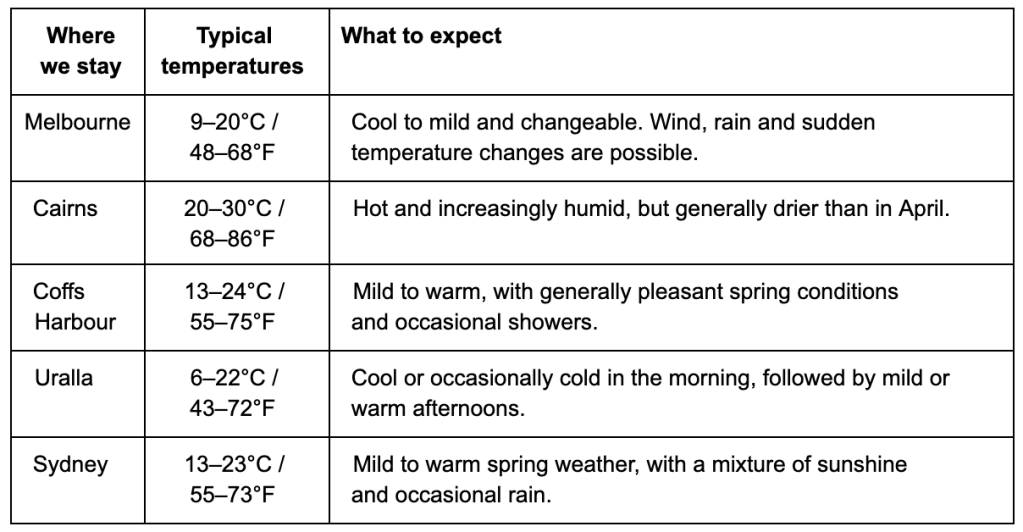
What to pack for Australia in September and October
Pack for warm weather in Cairns and cooler spring conditions elsewhere:
● T-shirts and lightweight shirts
● Shorts or lightweight trousers for Cairns
● Long trousers for Melbourne and Uralla
● One warm sweater or fleece
● A light jacket
● A lightweight waterproof rain jacket
● Comfortable closed walking shoes
● Sandals or other warm-weather footwear
● Swimwear for Cairns
● Sun hat, sunglasses and sunscreen
A heavy coat is unlikely to be necessary, but your sweater and jacket should be warm enough for a cool morning in Uralla or a windy day in Melbourne.
New Zealand in February and March
February is late summer, while March marks the beginning of autumn. These are generally among the warmer months in New Zealand, but the South Island and West Coast can still be cool and wet.

Christchurch 10–23°C / 50–73°F
Usually mild to warm. Hot days, cool changes and windy conditions are all possible.
What to pack for New Zealand in February and March
Pack for mild to warm days, but be prepared for cooler South Island and mountain conditions:
● T-shirts and lightweight shirts
● Lightweight trousers, skirts or shorts
● One sweater or fleece
● A light warm jacket
● A good waterproof rain jacket
● Comfortable, water-resistant walking shoes
● Sun hat, sunglasses and sunscreen
● A compact umbrella, if desired
Even in summer, bring the fleece, warm jacket and waterproof layer. They may be needed around Queenstown, Franz Josef and Milford Sound.
New Zealand in April

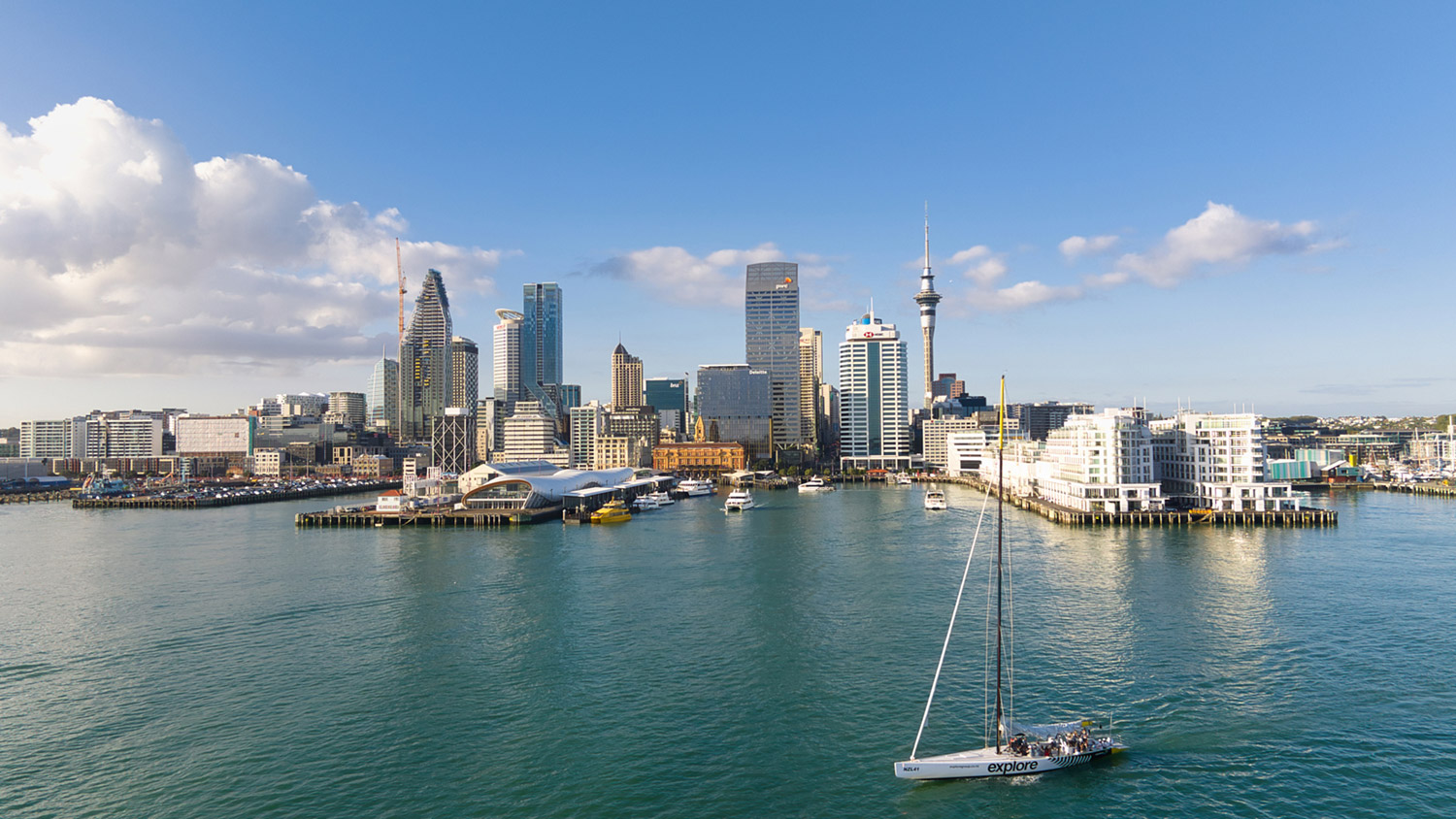
Auckland Tour with Rangitoto Island Volcano
April is autumn. Auckland and Rotorua should remain relatively mild, but the South Island will be cooler, particularly in the mornings and evenings.
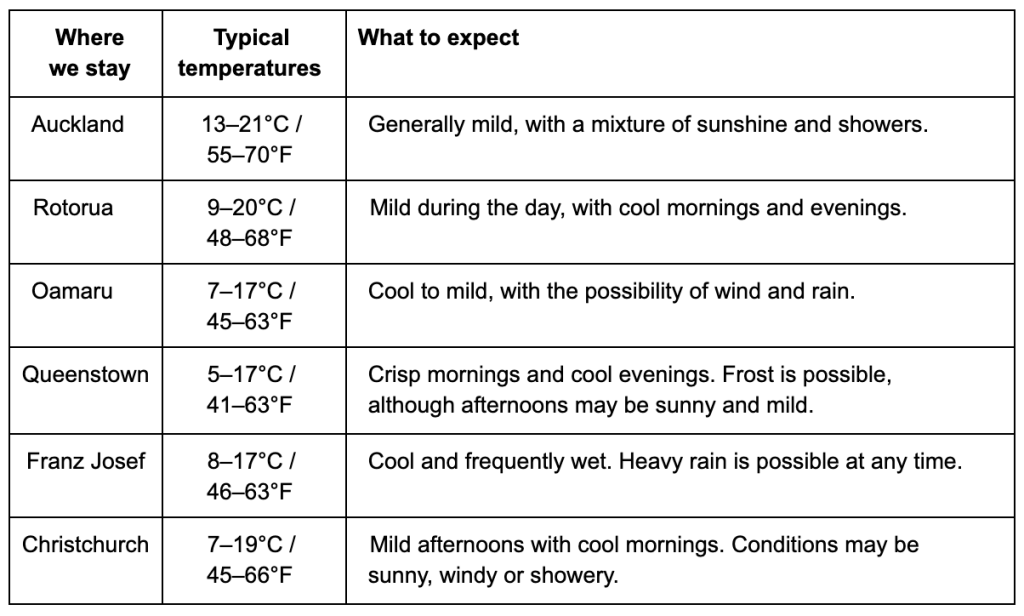
What to pack for New Zealand in April
Pack for autumn conditions and use several light layers:
● T-shirts or other base layers
● Long-sleeved shirts
● Long trousers
● A warm sweater or fleece
● A light insulated jacket
● A good waterproof and wind-resistant rain jacket
● Comfortable, water-resistant walking shoes
● A warm hat or beanie for colder mornings
● Sun hat, sunglasses and sunscreen
A large, heavy winter coat should not be necessary, but you will need more warm clothing than in February and March.

Waitomo Glowworm Caves, Waikato. Photo Shaun Jeffers
New Zealand in October and November
October and early November are spring. This is one of New Zealand’s most changeable seasons. You may encounter warm sunshine, cold wind and rain within the same day.
Conditions in early November may be slightly warmer than in October, but the same packing advice applies.
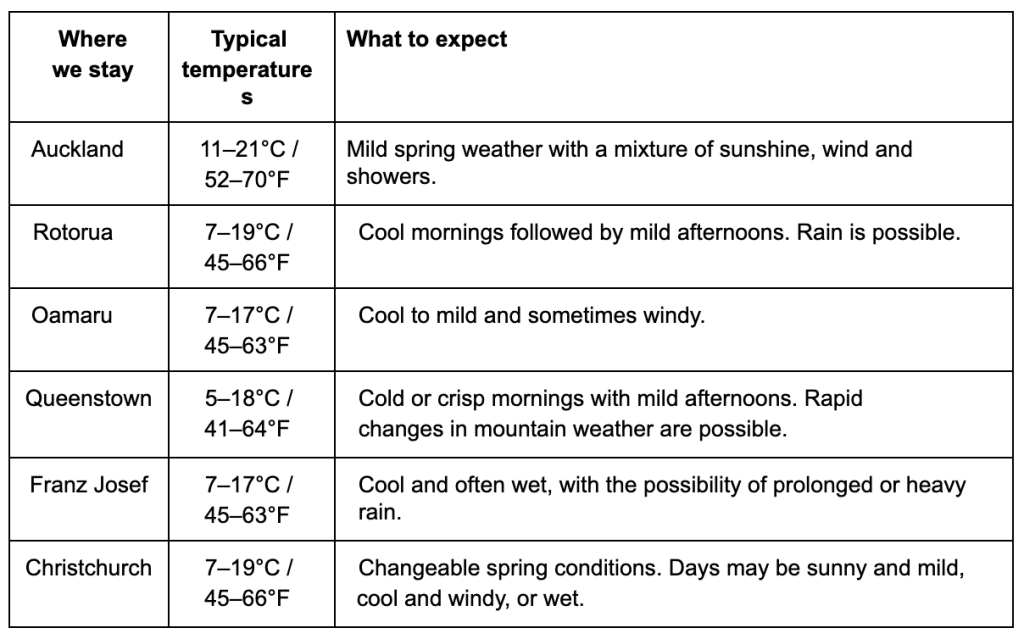
What to pack for New Zealand in October and November
Pack for spring using layers that can be added or removed throughout the day:
● T-shirts or other light base layers
● Long-sleeved shirts
● Long trousers
● A warm sweater or fleece
● A light insulated jacket
● A good waterproof and wind-resistant rain jacket
● Comfortable, water-resistant walking shoes
● A warm hat or beanie for cold mornings and mountain areas
● Sun hat, sunglasses and sunscreen
These months can feel warm in the sun but cold in the wind or rain. A waterproof outer layer and at least one warm mid-layer are essential.
Packing for Every Tour
Whichever departure you choose, the most effective approach is to bring several light layers rather than one bulky coat. You should be able to combine:
1. A light base layer or T-shirt
2. A sweater or fleece
3. A light warm jacket
4. A waterproof and wind-resistant outer layer
This combination will cover most of the conditions we are likely to encounter while keeping your luggage manageable.
Forecasts become much more reliable shortly before departure. We recommend checking the following official sources approximately one week before your tour:
● Australia: Australian Bureau of Meteorology
● Australian historical averages: Climate Data Online
● New Zealand: MetService
● New Zealand regional climate information: Earth Sciences New Zealand
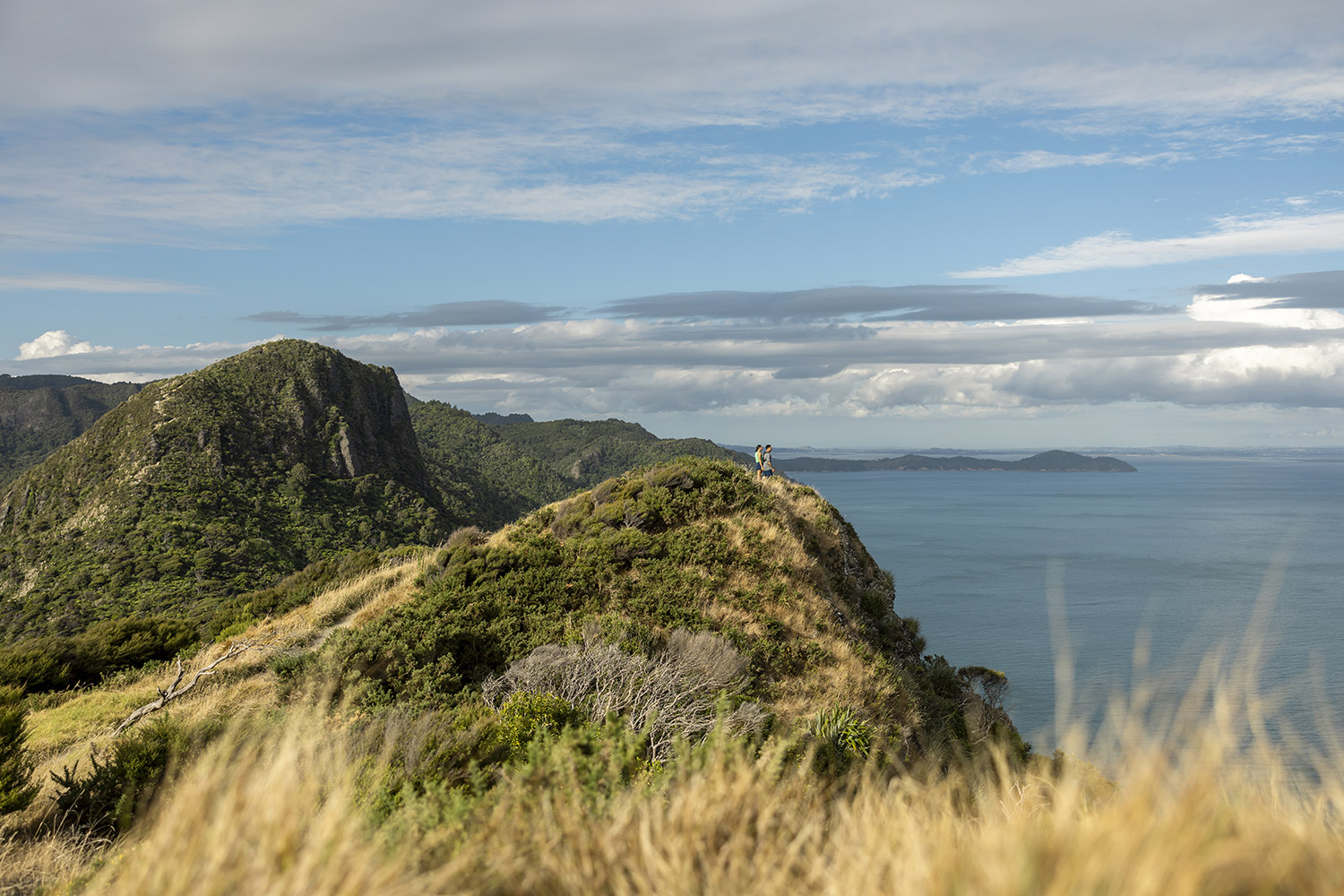
Waitākere Ranges, West Coast, Auckland. Photo: Miles Holden